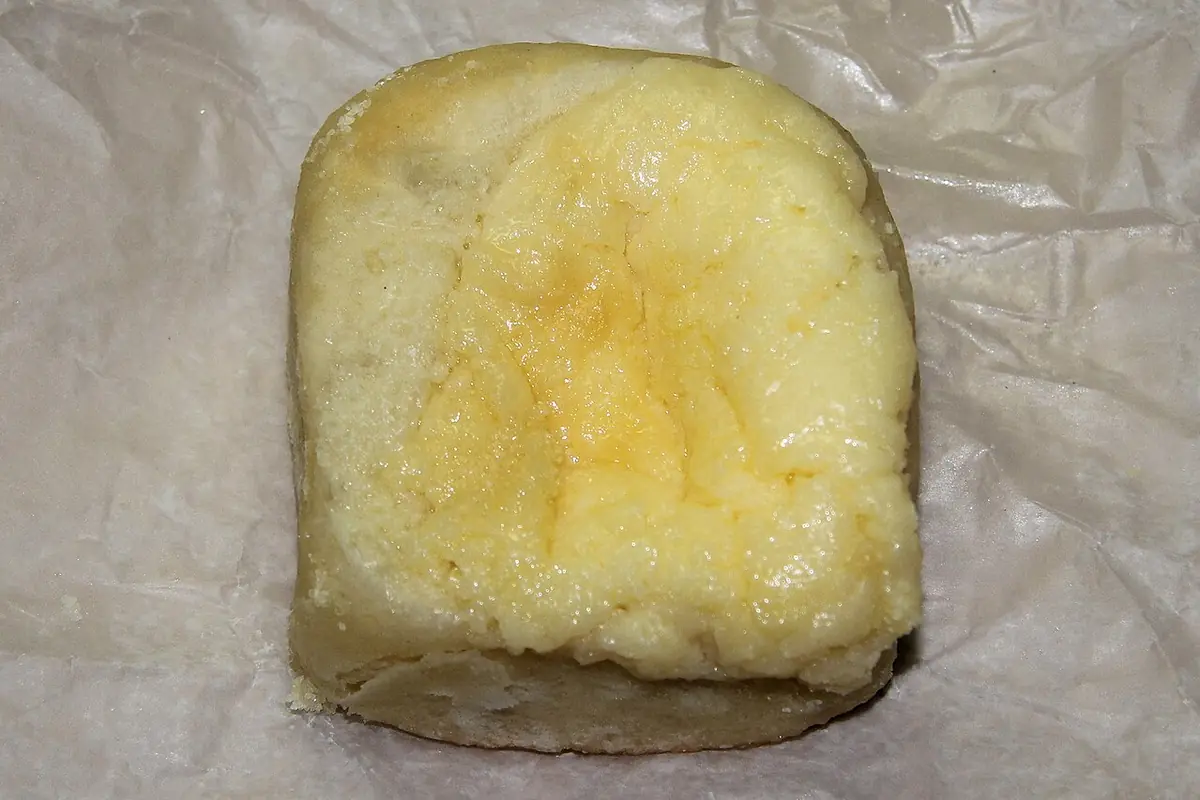
How a Czech pastry became a Texas institution
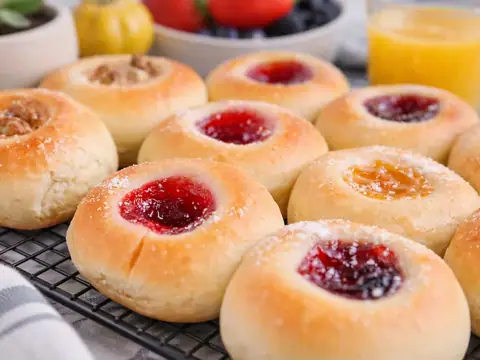
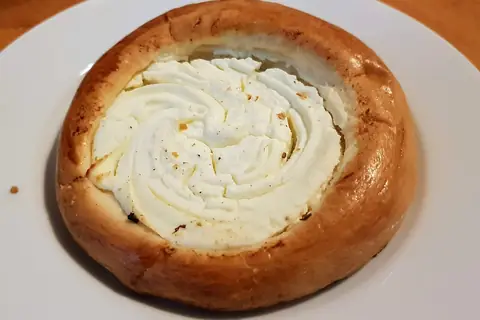
Czech immigrants began settling in central Texas in the mid-1800s, farming the blackland prairie between Houston, Austin and Waco. They brought the koláč, a round, slightly sweet yeast bun with a thumbprint well in the center filled with fruit, poppy seed or sweetened farmer's cheese. Church festivals, family reunions and Sunday tables kept the recipe alive, and small towns along what Texans call the Czech belt built reputations on them. West, a town on I-35 between Dallas and Waco, became a well-known stop for travelers, and Caldwell holds an annual kolache festival.
The klobasnek (plural klobasniky) is a Texas Czech creation: the same soft dough wrapped around a link of smoked sausage, its name drawn from the Czech word for sausage. In much of Texas, and at the growing number of kolache shops in other states, both items are simply sold as kolaches, so read the menu carefully.
Sweet fillings worth knowing
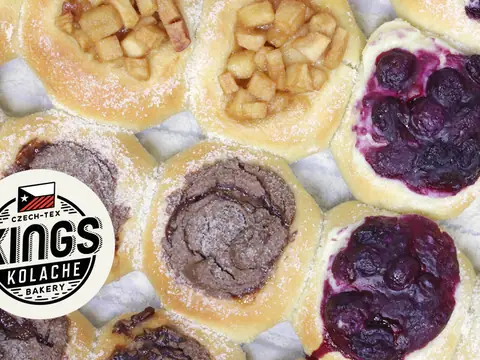
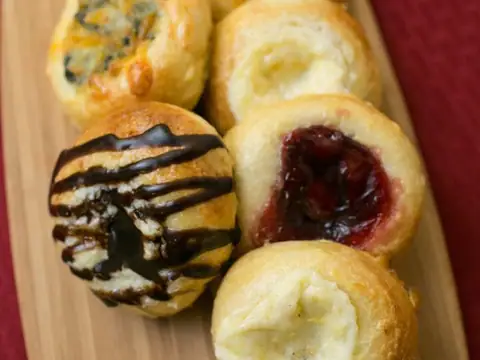
- Poppy seed (mák): ground poppy seeds cooked with milk and sugar into a dark, nutty paste. It is the traditional favorite at many Czech-Texan bakeries.
- Cream cheese or farmer's cheese: sweetened and lightly lemony, sometimes swirled with fruit.
- Apricot and prune: old-fashioned fruit fillings with a pleasant tartness.
- Cherry, peach, strawberry and blueberry: the brighter, sweeter crowd-pleasers.
Many bakers finish the edges with posypka, a crumbly streusel of sugar, flour and butter that adds crunch to the soft dough. A good kolache should feel light for its size, and the dough should taste faintly of butter and egg rather than of sugar alone.
Savory kolaches and the breakfast rush
Sausage is the starting point, often a smoked pork or beef link from a Texas meat market, but menus now include sausage with jalapeño and cheddar, boudin, ham and cheese, brisket, and egg with bacon. Houston in particular has a deep bench of shops focused on these breakfast versions. They are designed to be eaten with one hand on the way to work.
Most shops open early, often by 5 or 6 a.m., and popular flavors can run low by mid-morning on weekends. Expect roughly $1.50 to $3 for a fruit kolache and $2.50 to $5 for a savory one, with dozens priced lower per piece. Office orders of several dozen should be placed the day before.
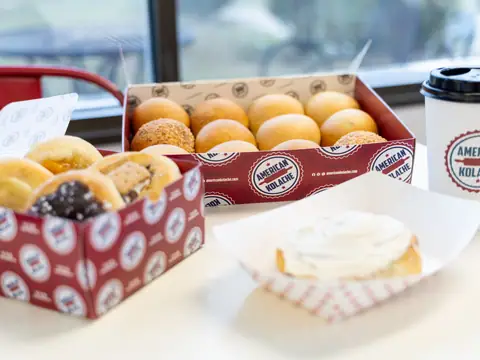
Storing a box
Fruit kolaches keep a day or two at room temperature in a closed box. Savory ones should be refrigerated after a couple of hours and reheated in a 325°F oven for about 8 minutes, or 20 seconds in the microwave. Both freeze well; wrap them individually and warm them straight from frozen.