Yeast, cake or something in between
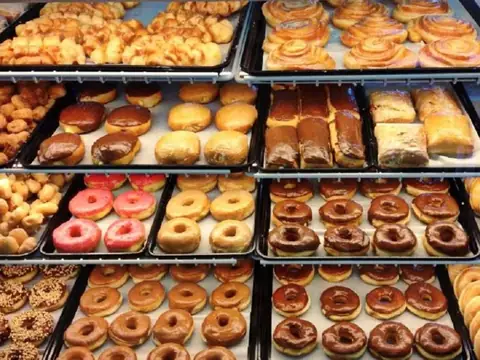
Almost every donut case is built on two doughs.
- Yeast-raised donuts are made from an enriched, risen dough, cut and proofed before frying. They are light and airy with a slight chew. Glazed rings, Long Johns, Bismarcks and most filled donuts are yeast donuts.
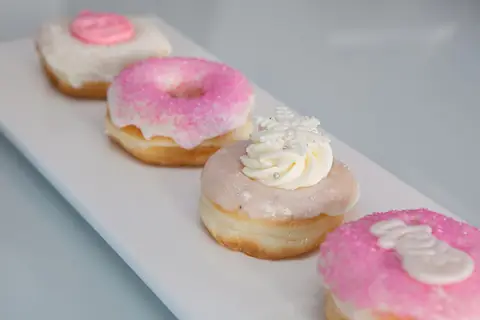
- Cake donuts are made from a sweet batter leavened with baking powder, dropped or extruded straight into the oil. They are denser and more crumbly, which makes them good for dunking and for holding toppings like sprinkles or chocolate icing.
- Old-fashioned donuts are a cake donut made with sour cream or buttermilk, fried so the surface cracks into craggy petals that catch the glaze.
- Crullers are made from choux paste, the eclair dough, piped into ridged rings. A French cruller should be almost hollow and eggy inside.
Judging a donut in the case
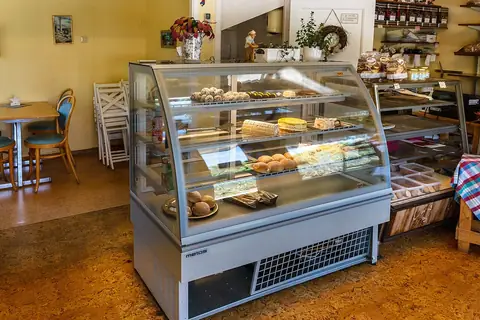
Look at the white ring around the equator of a yeast donut. A clear, pale band means the donut floated high in the oil, a sign of a well-proofed, light dough. A greasy sheen or a heavy feel means the oil was too cool or the donut has been sitting. Glaze should be set but still translucent, not cracked and cloudy. For filled donuts, ask how they are filled; many shops fill to order, which keeps the dough from going soggy.
Fresh means early. Most traditional shops fry before dawn and sell their best batch between 5 and 9 a.m. Some newer bakeries open later and fry in small batches through the morning until they sell out, so check hours before a weekend trip.
Regional donuts worth a detour
The US has plenty of local variations. In New England, apple cider donuts rolled in cinnamon sugar are a fall orchard tradition. In Chicago, Detroit and other cities with Polish communities, bakeries make pączki, rich jelly- or custard-filled rounds, for Fat Tuesday, and lines can start before opening. Hawaii's malasadas, brought by Portuguese immigrants, are holeless and sugar-coated. New Orleans claims the square, powdered beignet. California's many independent donut shops, a lot of them run by Cambodian American families, helped make the pink box a West Coast standard.
What to pay
Classic glazed and cake donuts usually cost about $1.25 to $3 each at neighborhood shops, with a dozen running around $12 to $22. Specialty or brioche donuts from craft bakeries are often $3.50 to $6 apiece. Many shops discount the dozen or throw in a thirteenth donut. Specialty shops often sell out of their most popular flavors well before noon, and some take preorders for a box of a dozen to pick up at opening, which is the safest way to get a birthday or office order exactly as you want it.