Levain, time and a hot oven
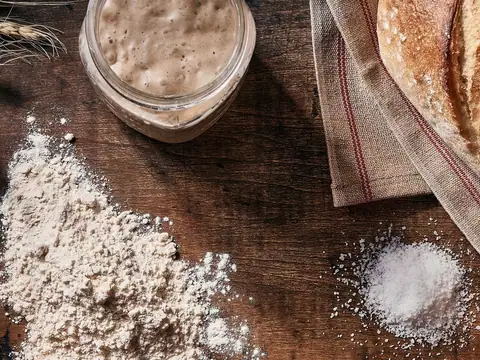
Most artisan loaves rise on a levain, a sourdough culture of flour and water kept alive with daily feedings. It carries wild yeasts and lactic acid bacteria, which together raise the dough and build flavor: mild tang, a slight sweetness from the crust, sometimes notes of yogurt or toasted grain. Commercial yeast acts faster but delivers less complexity, which is why bakers who use it still slow it down with pre-ferments such as poolish or biga.
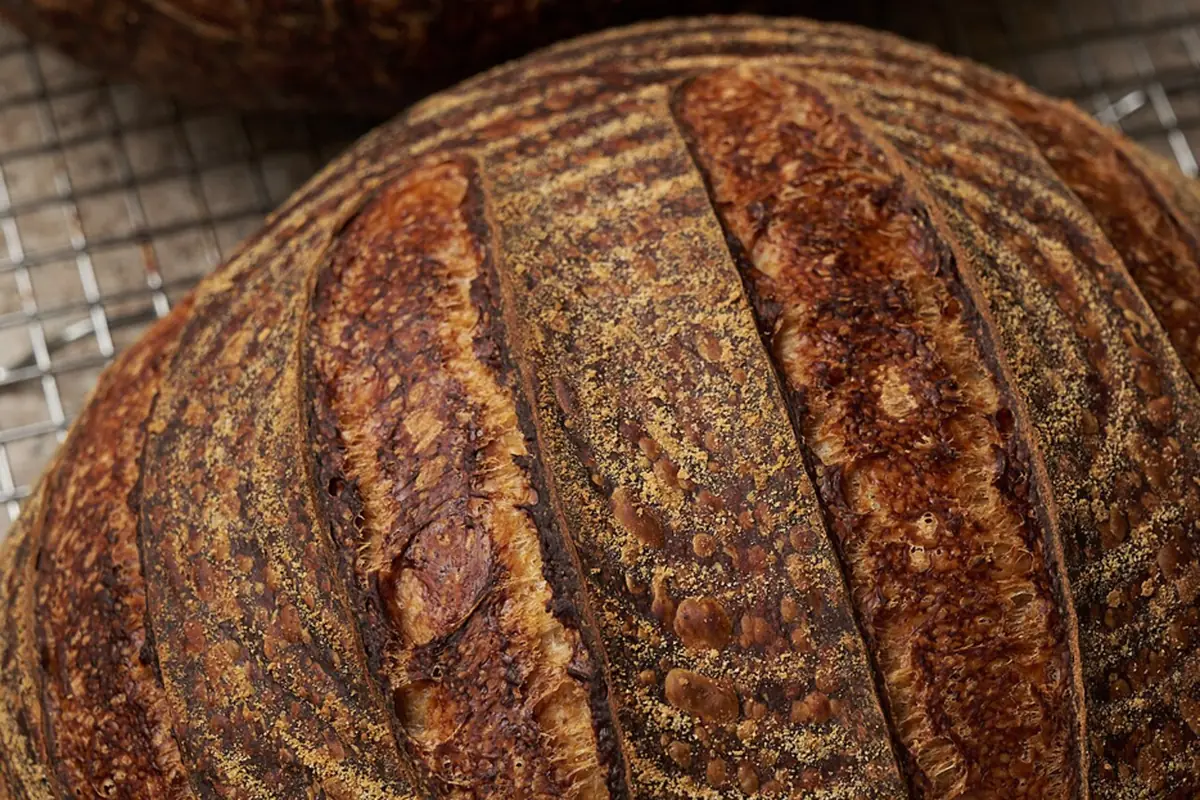
Time is the real ingredient. A typical sourdough is mixed, folded over several hours of bulk fermentation, shaped, then held in the cold for 12 to 48 hours before baking. That slow, cold rest deepens flavor, helps the crust blister and lets the loaf keep for several days instead of one. Baked in a very hot deck oven with steam, the crust caramelizes to a deep mahogany. A dark crust is deliberate, not burned. Note that sourdough fermentation does not remove gluten; it is not safe for people with celiac disease.
Working around the bake schedule
Small bread bakeries rarely make everything every day. A common pattern is a daily core of country sourdough, baguettes and a seeded loaf, with specialty breads assigned to particular days: dense rye midweek, olive or walnut loaves on Fridays, focaccia and brioche on weekends. Many post the schedule on their website or social media and put the day’s list on a chalkboard by the door.
Popular loaves can sell out before noon, so if you want something specific, arrive early or use online preorders, which many bakeries open a day or two ahead with a cutoff the evening before. Expect roughly $7 to $14 for a large naturally leavened loaf, more for loaves made with heritage grains or stone-milled local flour, and $3 to $5 for a baguette.
Bread shares and subscriptions
Borrowing the model of farm CSAs, many bakeries sell a bread share: you pay up front for a month or a season and pick up a loaf, sometimes two, each week at the bakery or a farmers market stand. Some shares are baker’s choice, which means you will meet breads you would never pick yourself. Others let you choose. Shares give the bakery predictable demand and give you a reserved loaf even on days the shelf empties early. Ask about skip weeks for travel before you sign up.
Keeping a good loaf good
Store crusty bread cut side down on a wooden board for the first day, then in a paper bag or linen bread bag. Plastic softens the crust; the refrigerator makes bread stale faster. For anything you won’t finish within three days, slice and freeze it, then toast straight from frozen. A whole loaf that has firmed up comes back with a quick rinse under the tap and eight to ten minutes in a 375°F oven.