The bread counter
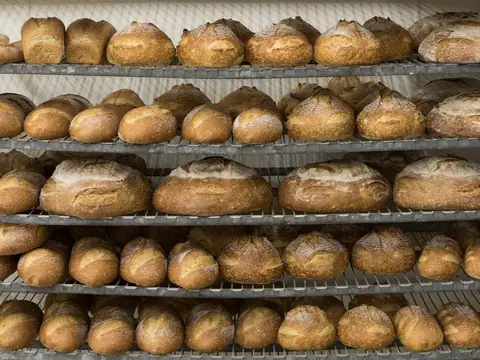
Germany has one of the deepest bread traditions in the world, and much of it is built on rye. Roggenbrot (rye bread) and Roggenmischbrot (rye-wheat mix) are leavened with sourdough, which rye flour needs to bake properly. Vollkornbrot is a heavy whole-grain loaf packed with cracked kernels and seeds, sliced thin and eaten with butter, cheese or cold cuts. True pumpernickel from Westphalia is baked or steamed at low temperature for many hours, which turns it dark and slightly sweet without added coloring.
Rolls are just as important: Brötchen (called Semmeln in Bavaria and Austria) are crisp breakfast rolls, often topped with poppy seeds, sesame or pumpkin seeds.
Laugengebäck: the pretzel family
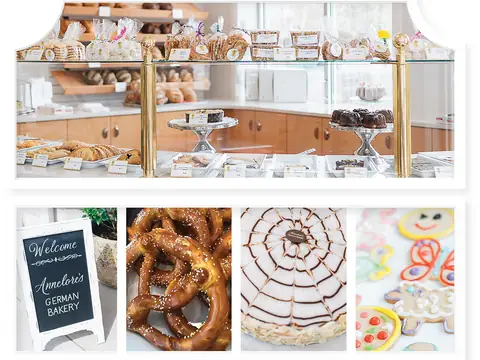
Real German pretzels, Laugenbrezeln, are dipped in a food-grade lye solution before baking. That bath is what creates the deep mahogany crust, glossy finish and distinctive flavor, and it is why soft pretzels from a mall stand taste so different. Bakeries use the same treatment for Laugenstangen (pretzel sticks), Laugenbrötchen (pretzel rolls) and pretzel croissants. A good pretzel has a thin, crisp crust over the thick belly and skinny, crunchy arms. Buy them the day they are baked; the salt draws moisture overnight.
Kuchen and Torten
- Bienenstich (bee sting cake): yeasted cake with a caramelized honey-almond top, filled with vanilla cream.
- Streuselkuchen: sheet cake under a thick layer of butter crumbs.
- Zwetschgenkuchen: plum cake, made when Italian prune plums are in season in late summer.
- Käsekuchen: cheesecake made with quark, lighter and tangier than American cheesecake.
- Schwarzwälder Kirschtorte: Black Forest cake with chocolate sponge, cherries, cream and kirsch.
- Frankfurter Kranz: a ring cake with buttercream and a brittle-coated outside.
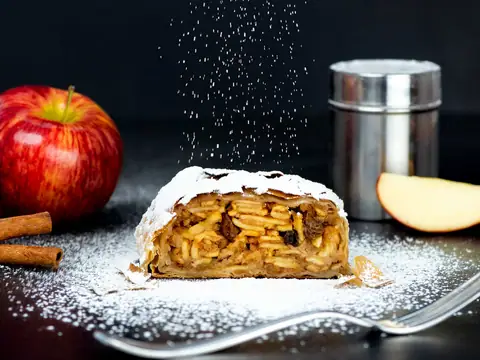
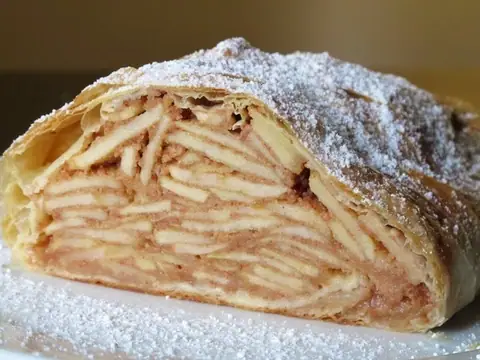
From Austria come Apfelstrudel, made by stretching dough until it is thin enough to read through, the chocolate-apricot Sachertorte and the lattice-topped Linzer torte.
Christmas at a German bakery
From late November, the shelves fill with Stollen (a dense fruit bread with marzipan, coated in butter and powdered sugar), Lebkuchen (spiced honey cookies, sometimes on a thin wafer base), Pfeffernüsse, Spekulatius and crescent-shaped Vanillekipferl. Stollen improves with a week or two of rest, so buying early is no problem.
Kaffee und Kuchen, American style
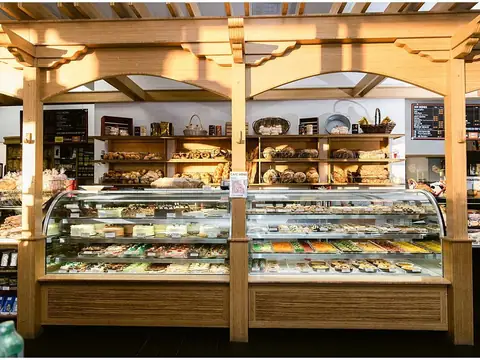
In German-speaking countries, mid-afternoon coffee and cake is a small daily institution, and the bakeries that keep this tradition alive in the US tend to have a few tables and a self-serve coffee urn or espresso machine. Cakes are cut from large sheets or rounds and sold by the slice, with whipped cream (Schlagsahne) on the side for a little extra. Sweetness is moderate, and fruit does a lot of the work. Heritage areas such as the Texas Hill Country, Wisconsin, Ohio and Pennsylvania still support German-style bakeries, but newer shops opened by recent immigrants are just as likely to be found in large coastal cities.