A map of the major styles
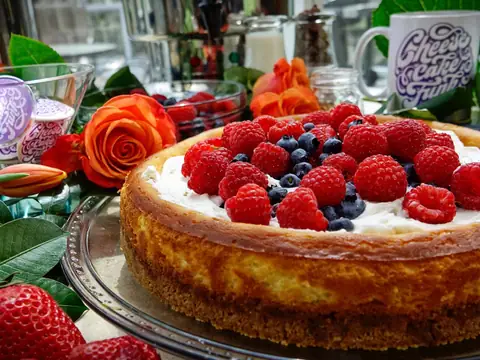
- New York: cream cheese, eggs, sugar and heavy cream or sour cream, baked slowly on a graham cracker or cookie crust. It is tall, dense, smooth and tangy, and the standard most US bakeries follow. Cream cheese itself is an American invention, first made commercially in New York state in the 1870s.
- Italian ricotta: made with ricotta, often lightened with citrus zest and sometimes studded with candied fruit. It is drier, lighter and slightly grainy, and Italian bakeries often sell it around Easter.
- Japanese soufflé (cotton): cream cheese folded with whipped egg whites and baked in a water bath, giving a tall, springy cake that jiggles. It is light and only mildly sweet.
- Basque burnt: a crustless cheesecake from San Sebastián, Spain, baked very hot until the top is deeply caramelized, almost black, while the center stays creamy and soft.
- No-bake: set with whipped cream or gelatin in the fridge, softer and mousse-like.
What separates a good slice from a great one
For New York style, look for a smooth, even texture from edge to center, with no grainy bits or weeping liquid. A small crack on top is not a flaw in itself, but a cake that has pulled away from the sides and gone dry and crumbly was overbaked. The crust should be crisp, not soggy, and thin enough not to dominate. The flavor should be tangy and rich rather than merely sweet.
For Basque cheesecake, the top should be truly dark and bittersweet, and the center should ooze slightly at room temperature. Japanese cheesecake should spring back when pressed and taste of cream cheese, not just egg.
Toppings such as cherry, strawberry and blueberry sauces are common, but the best test of a bakery's skill is a plain slice.
Ordering a whole cheesecake
Most bakeries keep plain and a few flavored cheesecakes on hand by the slice, usually for about $5 to $10 each. Whole cakes are commonly 8 or 9 inches across and cost roughly $35 to $75 depending on style, toppings and size. Ten-inch cakes serve 12 to 16. Many bakeries need two or three days of notice for a whole custom flavor, and more around Thanksgiving, Christmas and Easter. Cheesecake travels well and freezes well, which makes it a reliable choice for shipping or for making a day ahead of a gathering.
Serving and storage
Keep cheesecake refrigerated; it is a baked custard. It is best two to three days after baking, and safe for about five days covered in the fridge. Let New York and Basque slices sit 20 to 30 minutes before serving so the texture softens. Japanese cheesecake is best served cold. For neat slices, dip a long knife in hot water and wipe it between cuts. Whole cheesecakes freeze for one to two months if wrapped well; thaw overnight in the fridge.