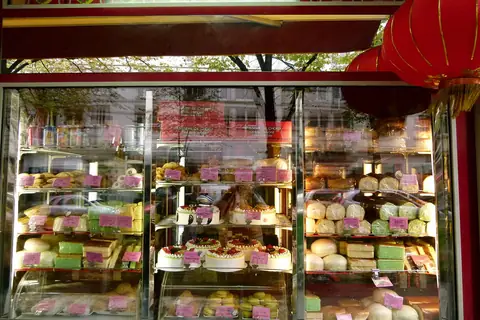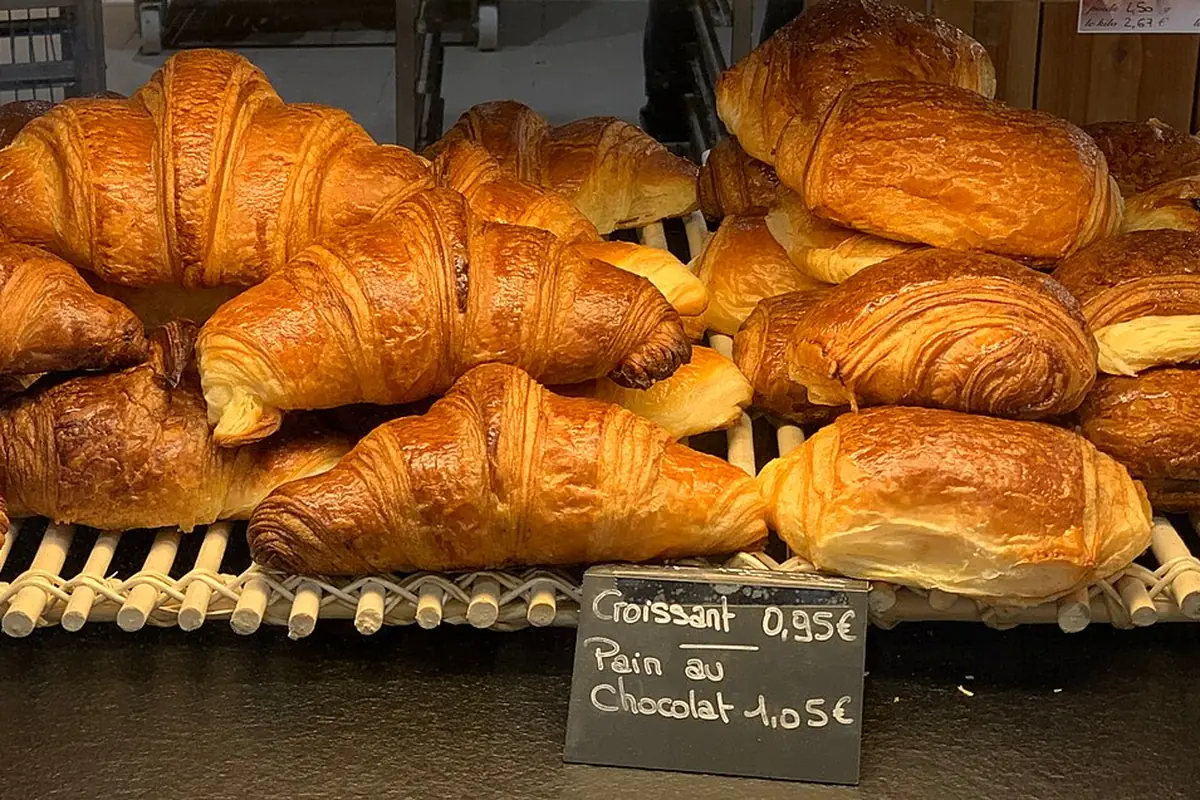
Boulangerie, viennoiserie, pâtisserie
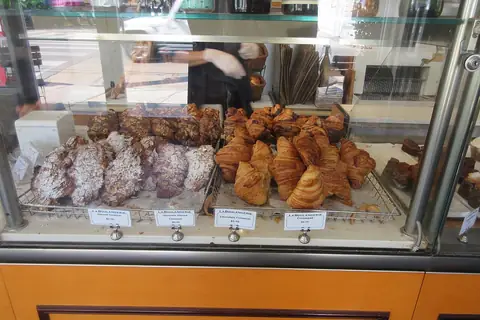
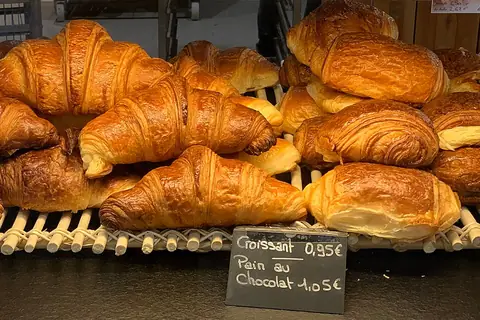
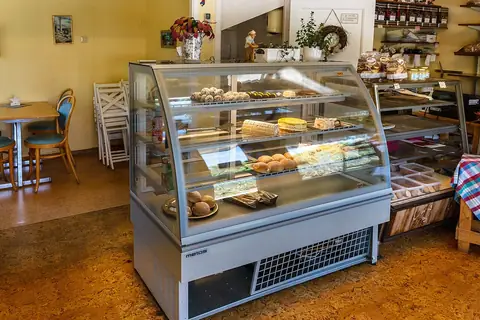
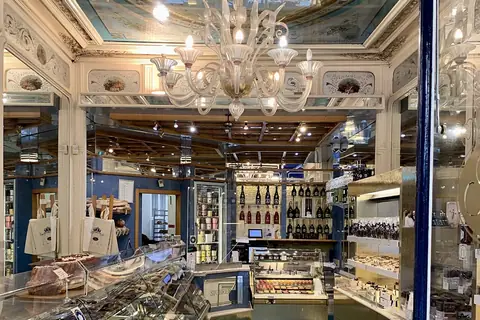
In France these are distinct crafts. A boulangerie bakes bread. Viennoiserie covers the rich, yeasted morning pastries: croissants, pain au chocolat, pain aux raisins and brioche. Pâtisserie is the domain of tarts, choux, mousse cakes and petits fours, built with pastry cream, ganache and fruit. American French bakeries usually combine all three, but the emphasis varies. A shop with a long bread list and a small pastry case is bread-first; one with glossy entremets and a short bread rack is a pâtisserie at heart.
How to judge a croissant and a baguette
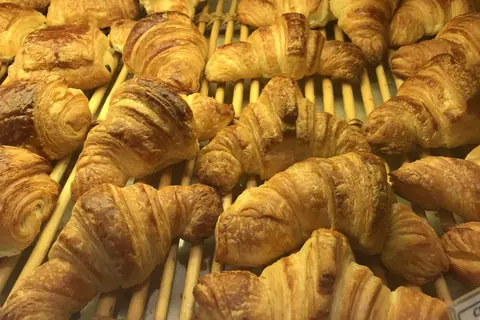
- Color: a croissant should be deep golden brown, not pale. Under-baked croissants taste doughy and greasy.
- Shatter: the outside should flake when you bite it, leaving crumbs everywhere.
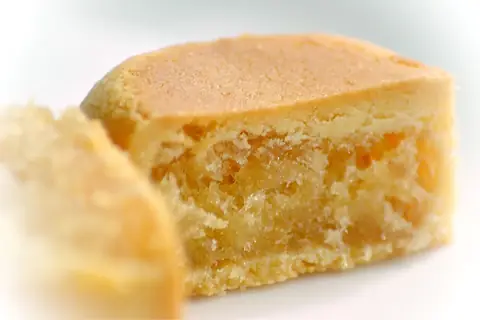
- Crumb: cut a croissant in half and look for an open, honeycomb structure of thin layers. Dense, bready interiors suggest rushed proofing or too little butter.
- Smell: it should smell of butter, not shortening.
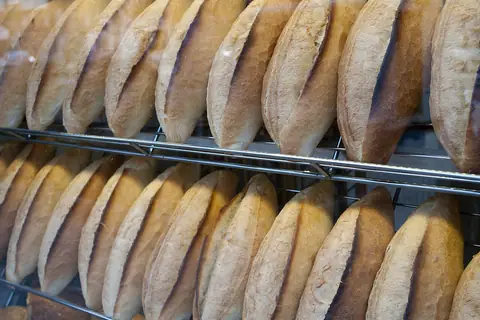
- Baguette: look for a crackly, blistered crust, sharp ears where the scores opened, and an irregular, creamy crumb. A pale, uniform loaf is usually a short-fermented one.
The pastry case, decoded
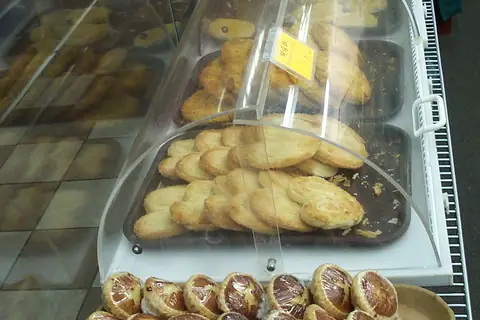
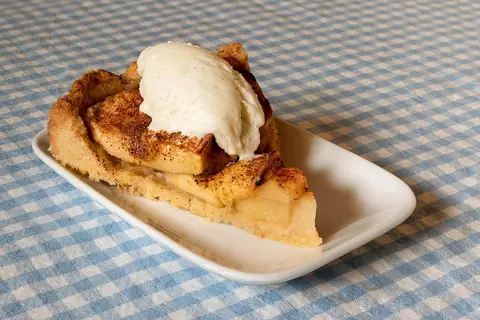
Éclairs are long choux filled with pastry cream and glazed. A Paris-Brest is a ring of choux filled with hazelnut praline cream. Tarte au citron balances tart lemon curd with sweet crust. Mille-feuille stacks puff pastry with pastry cream. Opéra layers almond sponge, coffee buttercream and chocolate ganache. From the regions come kouign-amann (Brittany's caramelized laminated cake) and canelés (Bordeaux's rum-and-vanilla custard cakes with a dark, crackly shell). In January, many shops sell galette des rois, a puff pastry tart filled with frangipane and hiding a small charm.
When to go and what it costs
Viennoiserie is best in the morning, ideally within a few hours of baking, and the most popular items can sell out by late morning on weekends. Baguettes often come out in more than one bake, so afternoon bread can be fresher than you expect. In most US cities, croissants run roughly $3.50 to $6, individual pastries $5 to $10, and whole tarts or entremets for a group start around $35 to $60, depending on size.
One more thing to watch for: butter. Many of the best US French bakeries use high-fat, European-style butter, usually 82 percent butterfat or more, for lamination, and some say so on their menus. Higher-fat butter is more pliable when cold, which helps bakers create thinner, more distinct layers. If a croissant tastes flat or leaves a waxy film, the fat is likely the reason. Ask the counter which items are made in-house; some shops bake from frozen dough supplied by others, which is not always obvious from the case.