Anatomy of a good tart
The shell is usually pâte sucrée, a sweet, cookie-like pastry made with butter, sugar and egg, or pâte sablée, which is sandier and more crumbly. It should be baked fully to a deep golden color so it snaps cleanly under a fork. A pale shell tastes floury and goes soft within hours.
Inside is crème pâtissière: milk, egg yolks, sugar and cornstarch or flour cooked into a thick vanilla custard. The best is flecked with real vanilla bean and set enough to hold a clean edge when cut, but still creamy rather than gluey. Some bakeries lighten it with whipped cream, which French pastry calls crème légère, or add a thin layer of almond cream baked into the shell.
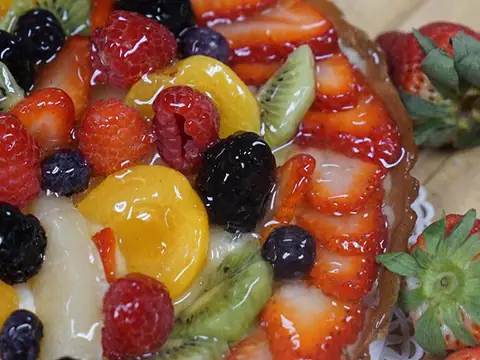
On top, the fruit is brushed with an apricot glaze or a clear neutral gel. That glaze keeps cut fruit from drying out and gives the tart its shine.
Small protections that keep the crust crisp
Moisture from pastry cream and fruit is the constant threat. Careful bakers brush the baked shell with a thin coat of melted white or dark chocolate or cocoa butter before filling, which works as a seal. If you bite into a tart and get a faint layer of chocolate between shell and cream, that is not decoration; it is engineering. A tart assembled the same morning and kept cold should still crunch at dinner. One assembled the day before rarely will.
A rough calendar of fruit
Mixed-berry and kiwi tarts are available year-round because those fruits are, but the most memorable tarts follow the market:
- Late spring: strawberries and rhubarb, then early apricots.
- Summer: raspberries, blackberries, blueberries, peaches, nectarines and figs late in the season.
- Fall: pears, poached or sliced, and Concord grapes in some regions.
- Winter: citrus, especially blood oranges and Meyer lemons, plus lemon curd tarts without cream.
Bakeries that change their tarts with the season are usually buying more carefully. A tart with pale, hard strawberries in January tells you something.
Sizes, prices and serving
Individual tarts of 3 to 4 inches usually cost about $5 to $9. Whole 8 to 10 inch tarts that serve 8 to 10 typically run $30 to $60, more for elaborate fruit work. Mini tartlets for showers and buffets are often sold by the dozen. Whole tarts usually need a day or two of notice. Keep them refrigerated, take them out 15 minutes before serving so the cream is not ice-cold, and cut with a sharp serrated knife using a gentle sawing motion. Eat within a day.