Why the best shops fill them at the counter
A cannoli shell is crisp, blistered and slightly brittle, made from a dough of flour, sugar, fat and wine (often Marsala), rolled thin, wrapped around metal tubes and deep-fried. Ricotta filling is moist. Once the two meet, the shell starts softening, and within a few hours a cannolo that was shatteringly crisp turns limp. That's why the best Italian bakeries keep shells and cream separate and pipe the filling when you order. If a shop's case is lined with pre-filled cannoli at 4 p.m., expect a softer shell. Some bakeries coat the inside of the shell with a thin layer of chocolate, which slows the process and adds flavor.
Ricotta, and what's mixed into it
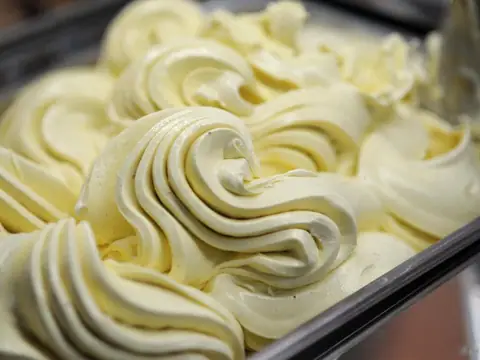
In Sicily, cannoli cream is traditionally made from sheep's milk ricotta, drained overnight, then sweetened and pressed through a sieve until smooth. Sheep's milk ricotta is richer and slightly tangy, and it's harder to find in the US, so most American bakeries use cow's milk ricotta, sometimes blended with mascarpone for extra smoothness. Good filling is thick enough to hold its shape and has a faint graininess, never runny or overly sweet.
Common additions are mini chocolate chips, candied orange peel or citron, a hint of cinnamon or vanilla, and occasionally a splash of liqueur. Some American bakeries also offer vanilla or chocolate pastry cream instead of ricotta, a style common in parts of the Northeast.
Ends, sizes and the Sicilian story
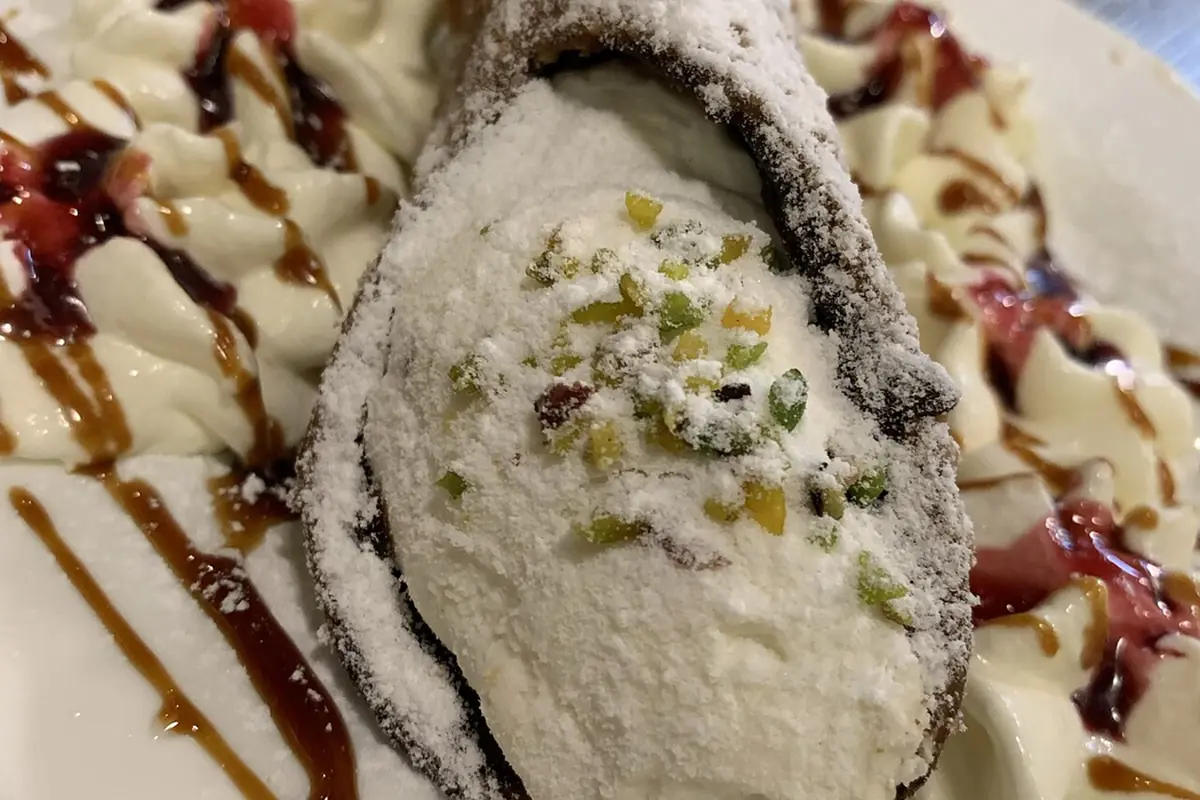
The ends of a cannolo get dipped after filling: chopped pistachios, mini chocolate chips, candied cherries or a strip of candied orange. A dusting of powdered sugar finishes it. Minis are two bites; standards are about five inches; some bakeries also sell oversized ones for sharing.
Cannoli come from Sicily, and they're most closely linked to Palermo and the surrounding area, where they were originally a Carnival pastry before Lent and are now eaten year-round. The name comes from canna, the river cane that cooks once used as forms for frying the shells. Sicilian immigrants brought them to the US in the late 19th and early 20th centuries, and Italian American neighborhoods in New York, Boston, Philadelphia and other cities have had cannoli counters ever since.
Ordering for a party
Standard cannoli typically cost about $3 to $6 each, and minis around $18 to $36 per dozen. For gatherings, many bakeries sell unfilled shells with a container or piping bag of filling, so you can fill them shortly before serving. Store shells in an airtight container at room temperature; filling must be refrigerated and keeps two to three days. Party trays of pre-filled cannoli are best eaten within a few hours.