How a Czech pastry became a Texas breakfast
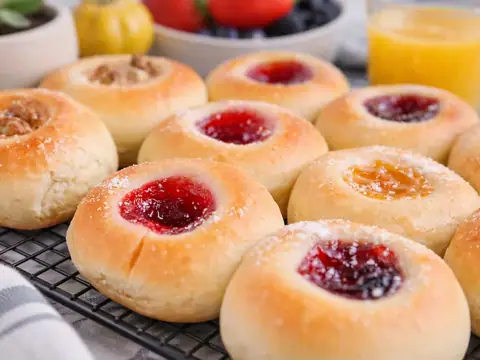
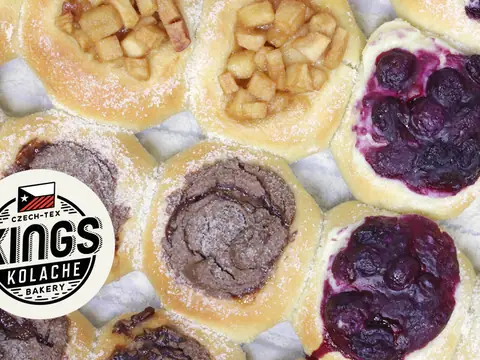
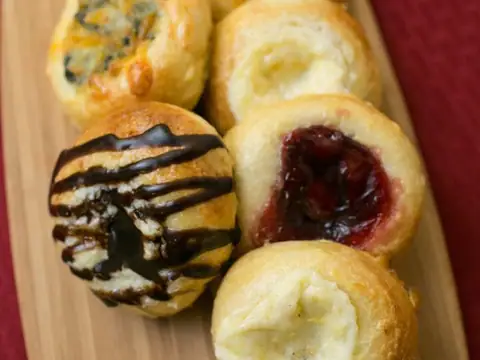
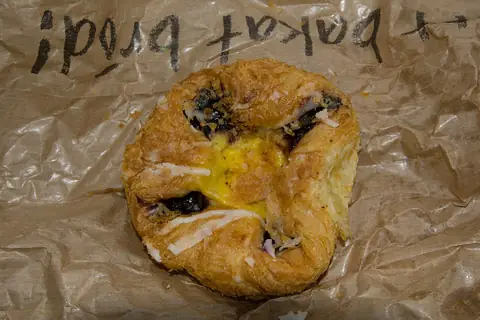
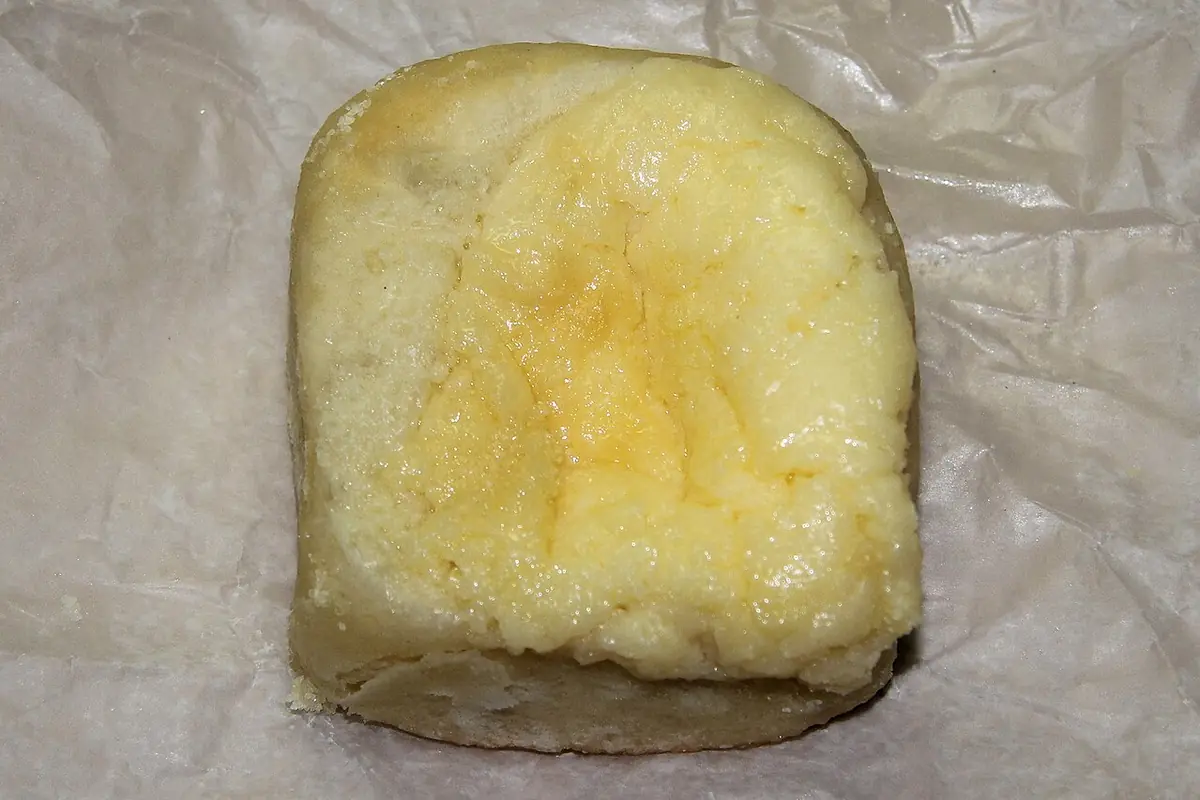
Czech immigrants began settling in Texas in the mid-1800s, many of them farming families who built communities across the Blackland Prairie and Central Texas. They brought the koláč, a soft, slightly sweet yeast bun with a well of fruit or sweet cheese pressed into its center, served at weddings, church gatherings and Sunday tables. Over generations the pastry spread beyond Czech communities, and small towns along Interstate 35 and in the region between Austin and Houston, including West and Caldwell, became known for them. Both towns hold annual festivals celebrating Czech heritage and kolaches.
The traditional dough is rich with butter, milk and egg. Classic fillings include apricot, prune, poppy seed, peach and sweetened farmer’s or cream cheese. Many bakers finish them with posipka, a crumbly topping of flour, sugar and butter.
Kolache or klobasnek?
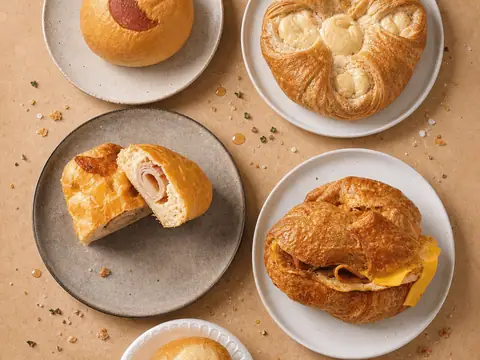
Ask for a sausage kolache anywhere in Texas and you will get one, but purists will point out that the term is technically wrong. A kolache is the sweet, open-faced pastry. The savory version, a link of smoked sausage wrapped completely in the same dough, is a klobasnek (plural klobasniky), a Czech Texan creation with no exact counterpart in the Czech Republic. Today the savory lineup runs well beyond plain sausage: sausage with jalapeño and cheddar, ham and cheese, scrambled egg with bacon, brisket, and boudin in shops closer to Louisiana. Most menus simply call all of them kolaches, and nobody at the counter will correct you.
Quality shows in the dough. A good kolache is pillowy and faintly sweet, pulls apart in soft strands and never tastes like a dinner roll. The sausage in a klobasnek should be a proper smoked link, ideally from a Texas meat market, not a cocktail frank.
Drive-thru by the dozen
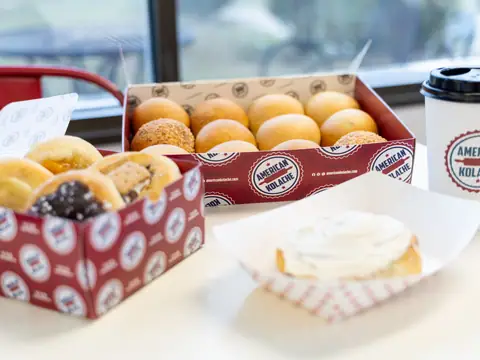
Across Texas, kolaches and donuts are typically sold under the same roof, and many of these shops are run by Southeast Asian immigrant families, particularly Cambodian and Vietnamese Americans. Shops often open at 5 or 6 a.m., many with drive-thrus, and do most of their business before 9. Single kolaches usually cost about $1.25 to $3.50, depending on filling, and a dozen roughly $15 to $35. For an office breakfast or a Saturday sports team, call a day ahead with a mixed order; most shops can split a dozen between sweet and savory and will box them in the same order you list them.
Kolaches are best within a few hours of baking. Keep leftovers in a sealed bag, refrigerate anything with meat or cheese, and warm them for 15 to 20 seconds in the microwave or a few minutes in a 325°F oven. Fruit kolaches freeze well for a few weeks.