From Twelfth Night to Fat Tuesday
Carnival season begins on January 6, Epiphany or Twelfth Night, which marks the visit of the three kings in Christian tradition. In Louisiana, that is the first day bakeries put out king cakes, and they keep baking them until Mardi Gras, the Tuesday before Ash Wednesday, which falls anywhere from early February to early March. Many New Orleanians consider it bad luck, or at least bad form, to eat king cake outside that window, and plenty of bakeries simply will not sell one before January 6.
The busiest stretch is the last two weeks before Mardi Gras, when offices, schools and parade parties go through cakes daily. Weekend preorders are a good idea.
The New Orleans cake, the colors and the baby
A New Orleans king cake is a ring of sweet yeast dough, somewhere between brioche and a Danish, braided or twisted and often swirled with cinnamon. It is topped with icing and sanded sugar in purple, green and gold, the Carnival colors, traditionally said to stand for justice, faith and power. Filled versions are now as common as plain ones: cream cheese, praline, strawberry, apple, Bavarian cream and many local twists.
A small plastic baby is hidden in or under the cake; the baby stands for the infant Jesus. Whoever gets the slice with the baby is supposed to buy or host the next king cake. Many bakeries now include the baby separately in the box and let you hide it yourself, partly to avoid choking risks, so check before cutting slices for children.
Galette des rois and rosca de reyes
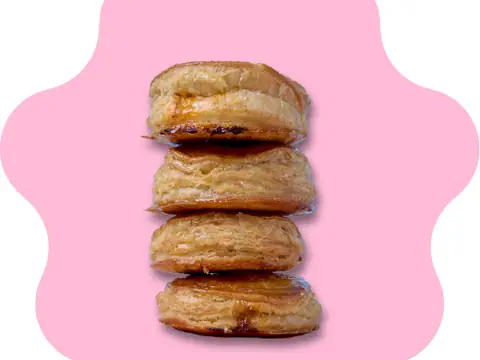
In northern France the Epiphany cake is the galette des rois: two disks of puff pastry around a filling of frangipane, an almond cream, with a scored, glazed top. A small charm called a fève is baked inside, and whoever finds it is crowned king or queen for the day, which is why the cake usually comes with a paper crown. In southern France, bakers make a brioche ring with candied fruit, the gâteau des rois.
The Mexican rosca de reyes, sold at panaderías around January 6, is an oval ring of soft, orange-scented bread decorated with strips of sugar paste and candied fruit, with one or more small figures baked inside. Whoever finds a figure traditionally hosts a tamales party on February 2, Día de la Candelaria.
Prices, sizes and shipping
A standard king cake serving 10 to 15 people usually costs about $25 to $50, with filled or specialty cakes at the higher end. Many Louisiana bakeries ship nationwide during the season, and overnight shipping can come close to doubling the price. Galettes des rois usually run $25 to $50 for a cake serving six to eight, and roscas range widely by size. King cake is best within two days, kept covered at room temperature.